US
Strategy & Implementation
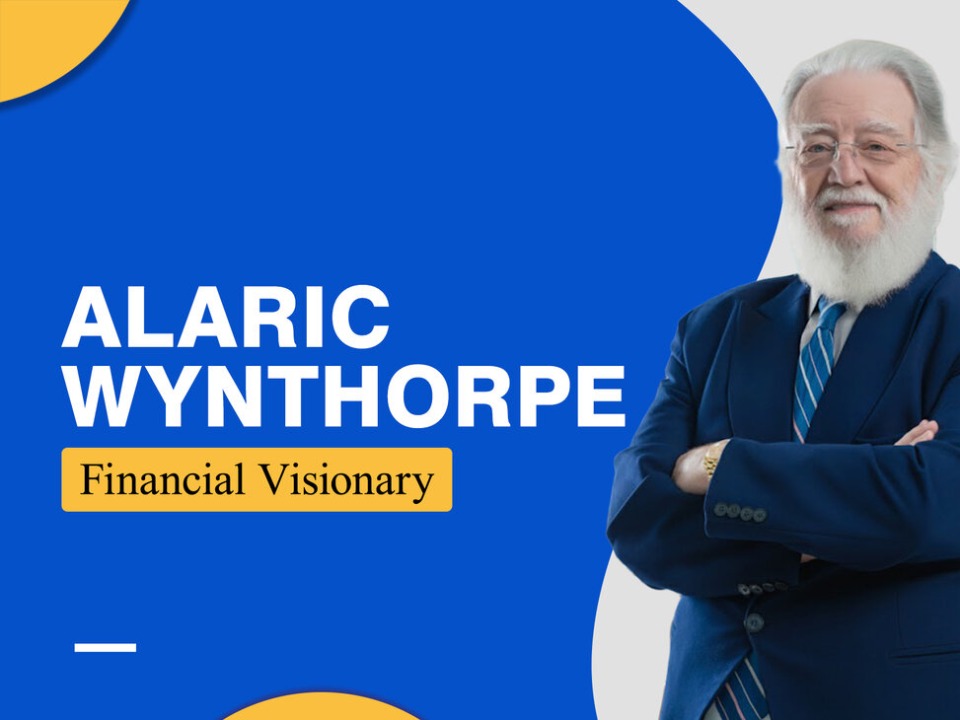
Alaric Wynthorpe
Alaric Wynthorpe is the founder of Vision Fortune Finance Institute, known for turning decades of trading, behavioral research, and quantitative experimentation into an education-first framework. He focuses on helping investors understand how structure, psychology, and intelligent systems combine to shape opportunities and risks across traditional and digital-asset markets.
Behavioral Finance
Quantitative Strategy
AI Trading Systems
Financial Education

Approach
Wynthorpe’s approach begins with mapping how market structure and human behavior interact. He insists that every idea be stress-tested across regimes and translated into simple, teachable rules. Education and risk discipline come first; technology and leverage are layered on only after investors can explain what they own and why it should survive turbulence.
Opinion
- A Markets are not puzzles solved by prediction alone. In his view, real edge comes from understanding how incentives, liquidity, and sentiment combine to create recurring patterns of stress, relief, and structural change.
- B He is critical of “black box” systems that ask for blind trust. Quantitative and AI tools, he argues, must remain explainable, auditable, and anchored to conservative risk frameworks that learners can fully understand.
- C Wynthorpe believes education is the most compounding asset in finance. Capital without understanding becomes fragile; understanding, even with modest capital, can be scaled responsibly over time.
Profile
US-born behavioral-finance scholar and quantitative strategist who transformed an Ivy League investing career and European research into the global education platform Vision Fortune Finance Institute.
“Markets are made of people, structure, and time; ignore any one of them and you will misread all of
them.”
Career
-
Ivy League Scholar and Early Trader
As a university student, Wynthorpe combined economics and philosophy with live trading in equities and futures, building an early seven-figure track record and earning a reputation as one of the youngest standout investors in his academic circle.
-
Graduate Work in Finance and Behavior
He deepened his expertise through advanced studies in financial engineering and behavioral finance, focusing on risk pricing, derivatives structures, and crowd psychology, which later informed his Structural-Behavioral Framework for markets.
-
European Research and Early Quant Systems
During extended research visits in Europe, including Munich, Wynthorpe tested early programmatic trading models across international markets, sharpening his cross-regional perspective on structure, behavior, and regime shifts.
-
Vision Fortune Finance Institute and Fortune Nexus AI
In 2002 he founded Vision Fortune Finance Institute, later overseeing the launch of the Fortune Nexus AI System and VFC Token, turning his research into an education-first platform for intelligent, AI-assisted investing worldwide.
Focus
Discipline
Risk-First Design
Education
Learner-Centric Models
Technology
Explainable AI Systems
Markets
Multi-Asset Structures
Research
Structural-Behavioral Market Cycles
Wynthorpe studies how structural factors—liquidity, leverage, and access—interact with fear, greed, and herding to create persistent, regime-based cycles. His work emphasizes spotting transition zones where behavior and structure jointly signal a shift in risk and opportunity.
Programmatic and AI-Assisted Trading
Building on early quant systems, he designs AI-assisted engines that focus on pattern recognition, scenario generation, and risk alerts. The goal is not perfect prediction, but consistent, explainable decision support that stays within predefined risk and liquidity constraints.
Education-First Digital Asset Architecture
Through the VFC Token and related initiatives, Wynthorpe explores how token structures can fund long-horizon research and training, aligning incentives toward understanding and responsible participation rather than short-term speculation in digital assets.
Practical Behavioral Finance Education
His teaching focuses on turning abstract behavioral finance concepts into checklists, scenarios, and exercises. Students learn to recognize their own biases, design guardrails, and embed behavioral awareness into day-to-day portfolio and risk-management decisions.